Finding a soft, rounded lump on the top of your foot can be unsettling, especially when it seems to appear out of nowhere. A ganglion cyst foot lump is one of the most common explanations. A ganglion cyst is a noncancerous (benign) sac filled with thick, jelly-like fluid that grows out of a joint or the lining around a tendon. On the foot, it most often sits on the top of the foot or near the ankle.
Many ganglion cysts are harmless and cause little trouble, and some shrink on their own. Others rub against shoes or press on nerves and become painful. A podiatrist (a doctor who specializes in the foot and ankle) can confirm the diagnosis with an exam and, when needed, imaging. Treatment options range from watching the cyst and adjusting footwear to draining it with a needle or removing it surgically, depending on your symptoms and the cyst itself.
The good news is that you do not have to guess. This guide walks you through what a ganglion cyst is, why it forms, how it is diagnosed and treated, and which signs mean it is time to have it looked at. At Best Foot Doctor NY, Dr. Emmanuel Fuzaylov (Dr. E) and our team evaluate a wide range of foot and ankle concerns as part of our full range of podiatric services.
What Is a Ganglion Cyst on the Foot?
Your joints and tendons are surrounded by thin linings that produce a slippery fluid called synovial fluid. This fluid helps joints move smoothly and lets tendons (the cords that connect muscle to bone) glide without friction.
A ganglion cyst forms when this fluid collects in a small pouch that bulges out from a joint capsule or tendon sheath. The pouch is often connected to the joint or tendon by a narrow stalk, a bit like a balloon on a string. The fluid inside is thicker than normal joint fluid, which is why the lump can feel firm even though it is filled with liquid.
On the foot, ganglion cysts tend to appear:
- On the top of the foot, often over the midfoot joints
- Around the front or sides of the ankle
- Near the toes, along tendons
They can be as small as a pea or larger, and their size may change over time. You can read a short definition in our glossary entry on ganglions.
What Causes a Ganglion Cyst?
In many cases, there is no single clear cause. Your podiatrist may consider a few factors that are commonly associated with these cysts:
- Joint or tendon irritation. Ongoing stress on a joint or tendon may encourage fluid to collect.
- Repeated pressure. Tight shoes, snug laces or straps that press on the top of the foot may play a role for some people.
- A past injury. Some cysts appear after a sprain or other injury to the area.
- Wear and tear in nearby joints. Arthritis (joint inflammation or wear) in the midfoot or ankle can be linked to cysts in some patients.
Ganglion cysts are not contagious, and they are not a sign that you did something wrong. They can develop in people of many ages and activity levels.
Ganglion Cyst Foot Symptoms: What You May Notice
Some people only notice the lump itself. Others have symptoms that affect walking or wearing shoes. Common signs include:
- A visible bump that is round or oval and usually smooth
- A soft or rubbery feel, although some cysts feel quite firm
- Changes in size, sometimes growing with activity and shrinking with rest
- Pressure or aching, especially in closed shoes or laced sneakers
- Tingling, numbness or burning if the cyst presses on a nearby nerve
- Discomfort when moving the foot or ankle if the cyst sits near a joint or tendon
A cyst that causes no pain may still be worth having checked, simply so you know for certain what it is.
How a Podiatrist Diagnoses a Ganglion Cyst
Many different lumps can show up on the foot, so a careful evaluation matters. Your visit will usually include several steps.
Talking about your history
Your podiatrist will ask when you first noticed the lump, whether it has changed in size, whether it hurts, and whether you have had an injury, arthritis or similar lumps before.
A hands-on exam
The lump will be gently examined for size, firmness, tenderness and how freely it moves. Your podiatrist may shine a small light against it. Because a ganglion cyst is filled with fluid, light often passes through it, while solid lumps tend to block the light.
Imaging when needed
Depending on what the exam shows, your podiatrist may recommend imaging:
- X-rays do not show the cyst itself, but they can reveal arthritis, bone spurs (small bony growths) or other changes in the nearby bones and joints.
- Ultrasound uses sound waves to show whether the lump is filled with fluid or solid.
- MRI (magnetic resonance imaging) creates detailed pictures of soft tissue and can help map a cyst and its connection to a joint or tendon.
Ruling out look-alikes
Other conditions can resemble a ganglion cyst, including a lipoma (a soft, fatty lump), a plantar fibroma (a firm nodule in the arch), a bone spur, or swelling around an irritated tendon. Rarely, a lump turns out to be a different type of growth that needs further testing. This is one of the main reasons a podiatrist’s evaluation is worthwhile. For a quick visual overview, you can watch our short video, What Is a Ganglion Cyst?
Treatment Options for a Ganglion Cyst on the Foot
There is no one-size-fits-all plan. Your podiatrist will consider your symptoms, the size and location of the cyst, how it affects your daily life, and your overall health before recommending an approach.
Watching and waiting
If the cyst is painless and not interfering with walking or footwear, simply monitoring it is often a reasonable choice. Some ganglion cysts shrink or disappear on their own over time. Your podiatrist will tell you which changes to watch for.
Footwear changes and padding
Reducing pressure on the lump can make a big difference in comfort. Your podiatrist may suggest:
- Shoes with a roomier fit over the top of the foot
- Lacing patterns that skip the eyelets over the cyst
- Soft padding to cushion the area and spread out pressure
These steps do not remove the cyst, but many patients find they make everyday activities more comfortable.
Aspiration (draining the cyst)
Aspiration means using a needle to draw fluid out of the cyst. The area is usually numbed first. In some cases, your podiatrist may discuss combining aspiration with an injection of medication. Aspiration can reduce the size of the lump and ease pressure, and the fluid can help confirm the diagnosis. Because the stalk and lining of the cyst stay in place, the cyst can fill up again, and your podiatrist will talk with you about that possibility.
Surgical removal (excision)
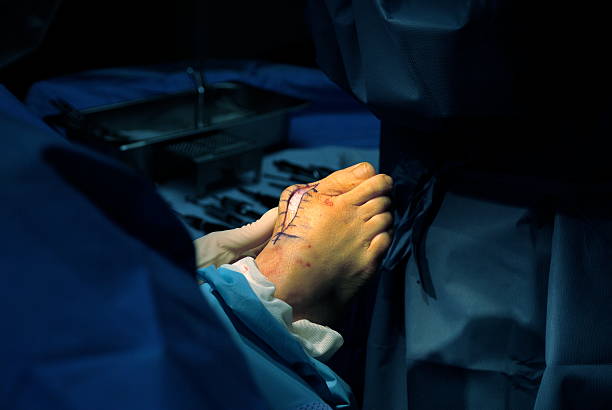
When a cyst is painful, keeps returning, presses on a nerve or makes it hard to wear shoes or walk, surgical removal may be discussed. During excision, the surgeon removes the cyst along with its stalk and the part of the joint capsule or tendon sheath it grows from, which aims to lower the chance of it returning.
Like any procedure, surgery has possible risks, which can include infection, a scar, stiffness, irritation of a nearby nerve, and the cyst coming back. Recovery is different for every patient and depends on the cyst’s location and the procedure performed. Your podiatrist will explain what to expect for your situation, including footwear, activity and follow-up visits.
A word about home remedies
Please do not try to pop, puncture or squeeze a ganglion cyst at home. An old folk remedy involved striking the lump with a heavy book, but this can injure the foot and does not deal with the source of the cyst. Puncturing it with a pin or needle at home can also introduce infection. If the lump is bothering you, a professional evaluation is the safer path.
Can a Ganglion Cyst Come Back?
Yes, ganglion cysts can return, whether they shrink on their own, are drained or are removed. Recurrence is generally more likely after draining alone than after surgical removal, but no treatment can rule it out completely. If a cyst comes back, it does not mean anything went wrong. It simply means it is worth revisiting your options with your podiatrist.
When to See a Podiatrist
It is a good idea to have any new lump on your foot checked, even if it does not hurt. Make an appointment if:
- The lump is growing, painful or making shoes uncomfortable
- You feel numbness, tingling or burning in your foot or toes
- The lump feels hard, fixed in place, or irregular in shape
- The skin over the lump changes color or texture
- A cyst keeps coming back after it has gone down
- The lump is affecting how you walk, work or exercise
Seek care promptly if you notice any of these more concerning signs:
- Redness that is spreading, warmth, or fluid draining from the area
- Fever or feeling unwell along with a painful lump
- An open sore or wound on the foot, especially if you have diabetes
- Sudden pain that makes it hard to put weight on your foot
These signs can point to infection or another problem that should not wait.
Getting a Lump on Your Foot Checked in New York
A lump on the top of your foot is often far less worrying once you know exactly what it is. A clear diagnosis lets you make a calm, informed choice, whether that means keeping an eye on it, making a few footwear changes, or talking through other treatment options.
Best Foot Doctor NY has offices in Brooklyn, Queens and Manhattan, and our team takes the time to listen, explain your options in plain language, and build a plan around your needs and goals. To learn more about the conditions we evaluate and treat, you can explore our podiatric services.
If you have noticed a new or changing lump on your foot, we would be glad to help you understand it. Call us at (718) 291-9020 or request an appointment online through our contact page. There is no pressure, just answers and a caring team ready to help you take the next step.